Examining Information Needs for 3pl Audit Software
Selecting 3pl Audit Software requires more than comparing functions. Companies should initially determine whether a platform can accept, organize, and confirm the operational and payment details that forms their logistics expenses.
A valuable evaluation starts with the information already created by providers, warehouses, transportation administration systems, enterprise resource planning systems, and 3PL companions. Recognizing those resources helps groups recognize compatibility voids before application.
FreightOptics markets 3pl Audit Software.
Start With Operational Information Resources
Operational info offers the context needed to evaluate whether a fee matches the service that was requested and provided. Pertinent documents might include shipment days, origin and destination locations, service levels, package or pallet information, weights, dimensions, tracking identifiers, distribution condition, accessorial events, and storage facility activity.
Businesses need to assess exactly how this information is kept and traded. Some companions may give structured files, while others make use of system integrations, portals, or standardized digital files. Throughout assessment, confirm whether the software program can bring these sources together without requiring substantial manual preparation. It must also preserve essential identifiers so shipment, order, billing, and distribution documents can be connected precisely.
Analyze Payment and Agreement Info
Invoicing data is main to an audit since invoices include the quantities that require to be examined. Essential areas can include billing numbers, invoice days, delivery recommendations, billed solutions, base transportation charges, gas charges, accessorial fees, tax obligations, credits, adjustments, and settlement status. For warehouse and satisfaction task, services may likewise require storage space, managing, pick-and-pack, receiving, returns, and unique service fee.
Agreement and price 3PL audit reporting software details is worthy of equal focus. A system might need to evaluate negotiated rates, minimum costs, dimensional regulations, gas timetables, area definitions, surcharge problems, money requirements, and effective dates. Ask how these terms are represented and preserved, especially when arrangements vary by carrier, consumer, facility, lane, or service kind. Clear support for versioned regulations can aid make sure a billing is evaluated versus the terms that used when the solution took place.
Assess Data Top Quality and Matching Requirements
Even qualified audit software application depends on trusted source details. Assessment teams should analyze duplicate documents, missing tracking numbers, inconsistent address styles, contrasting weights, device distinctions, incomplete accessorial codes, and day or time-zone disparities. They must also determine which areas are required for matching invoices to shipments, orders, contracts, and proof-of-delivery details.
A strong examination consists of representative samples instead of only clean test data. Usage common deliveries, exceptions, returns, worldwide motions, multi-package orders, and invoices including credit histories or challenged fees. This exposes whether the platform can determine connections across documents and discuss why a charge was approved, flagged, or denied.
Consider Reporting, Controls, and Data Accessibility
The value of audited data extends past discovering individual inconsistencies. Companies might need summaries by service provider, facility, client, solution degree, lane, shipment kind, or invoicing period. They might additionally wish to distinguish recoverable errors from valid charges and monitor recurring issues. Validate that the software application can give beneficial coverage while retaining the transaction-level information required for evaluation.
Information gain access to and governance ought to belong to the assessment as well. Testimonial user approvals, audit histories, export choices, retention techniques, and the capability to document choices or modifications. These abilities sustain cooperation among logistics, money, procurement, and operations teams without losing the initial document or the reasoning behind an adjustment.
Build an Assessment List
Prior to selecting a platform, create a list that maps each required data resource and field to a business function. Consist of operational events, invoices, rate arrangements, account frameworks, exception codes, and reporting demands. Videotape the anticipated layout, upgrade regularity, accountable proprietor, and any kind of transformation required prior to the data can be utilized.
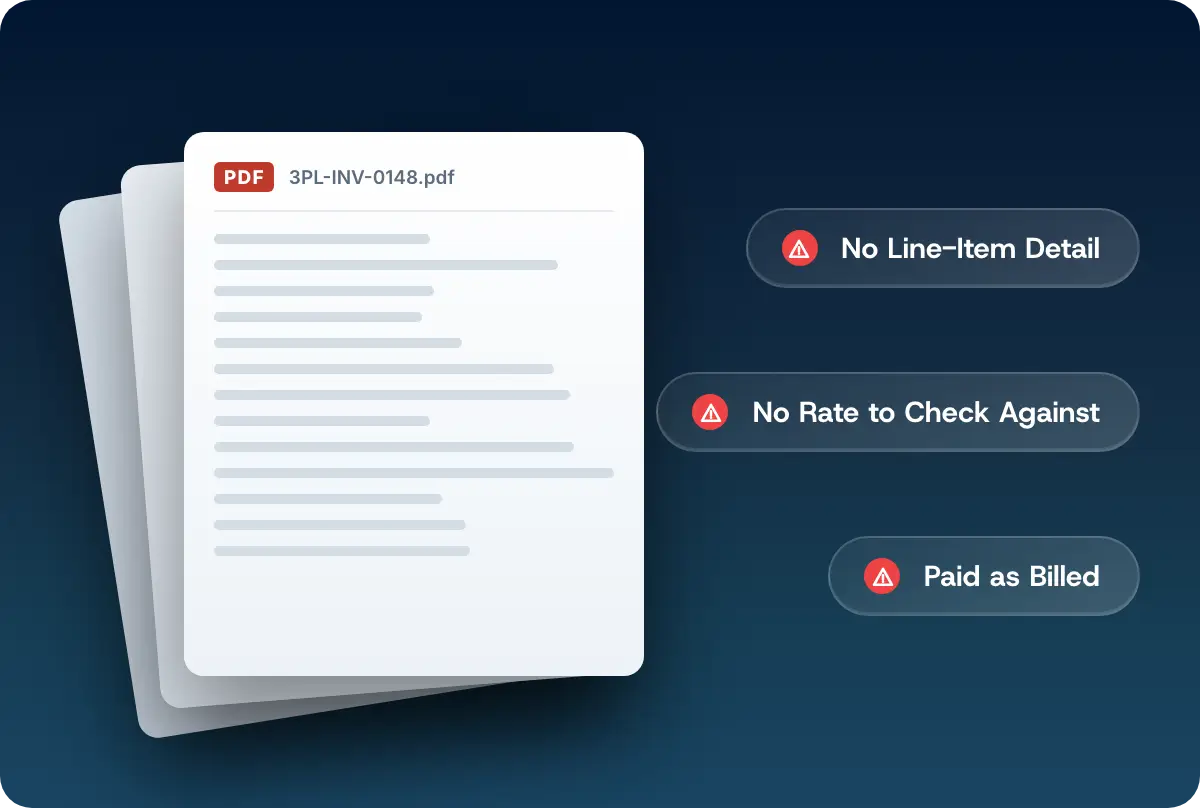
FreightOptics provides 3rd Party Logistics Audit services, and its 3pl Audit Software can be taken into consideration alongside the company's current systems, companion needs, and audit procedures. A focused review of information requirements helps businesses choose software application that fits their functional environment and sustains consistent, explainable payment analysis.
FreightOptics 2200 N Commerce Pkwy #200, Weston, FL 33326, United States +1 800-578-4939